
4 Games on One Game Pak
2007 •Game Boy Advance
A compilation of four Nickelodeon games on a single cartridge.
PowKiddy X2 by PowKiddy, priced around $80, Horizontal retro handheld, running RetroArch, powered by RockChip RK3128, with a 7.0 inch display


60 of 65 catalogued fields are filled in for this handheld. Anything the catalogue has not recorded is labelled Not documented rather than estimated.
Marketplace rows use affiliate-friendly links where available. Average price stays based on the console database, not live per-store pricing.
| Store | Price |
|---|---|
|
Amazon
Amazon search results
|
$80 |
|
Aliexpress
Imported from spreadsheet hyperlink
|
$80 |
|
Alibaba
Alibaba search results
|
$80 |
Affiliate disclosure and terms are linked in the footer.
Broad emulation range
This is a data-grounded review of PowKiddy X2, built around the hardware, the compatibility grades, the price band, and the devices most likely to tempt you away from it.
PowKiddy X2 is not trying to win every argument at once; its appeal lives in the balance between emulation comfort, day-to-day usability, and whether its price still feels sane.
Before the review gets opinionated, here is the clean spec picture. This table is the reality check that keeps the rest of the write-up grounded.
| Category | Details |
|---|---|
| Brand | PowKiddy |
| Release | 2020 / 04 |
| Form factor | Horizontal |
| Operating system | RetroArch |
| Overall performance | 7/10 · B+ |
| SoC | RockChip RK3128 |
| CPU | Cortex-A7, 4 Cores, and 1.3 GHz |
| GPU | Mali-400 MP2, 2 Cores, and 500 MHz |
| RAM | 512 MB |
| Display | 7.0 inch, IPS, and 60 Hz |
| Resolution | 1024 x 600, 128:75, and 169.55 PPI |
| Battery and cooling | 3000 mAh |
| Storage and I/O | External MicroSD, Micro USB x2, HDMI, and 3.5mm Headphone |
| Price | $80 |
If this review pulls you in, the fastest next rabbit hole is Q500 / PS5000 / Lintian LT-8203 and Q900 / PS7000, because those are the products most likely to clarify whether PowKiddy X2 is your real match or just your current curiosity.
PowKiddy X2 is currently tracked around $80 and lands in the $75 - $100 pricing band. Price does not just change whether a device feels affordable. It changes what kinds of flaws buyers are willing to forgive.
The spreadsheet points shoppers toward Aliexpress and Ebay for availability. That matters because storefront quality, shipping confidence, and after-sales expectations often shape the emotional experience of a purchase before the box even arrives.
Every handheld makes tradeoffs somewhere, even when the spreadsheet leaves them unstated. Good buying advice is not about pretending the downsides do not exist; it is about deciding whether the downsides land in the part of the experience you personally care about.
PowKiddy X2 is described with battery: 3000 mAh. Those are not background details; they shape noise, comfort, endurance, and whether the device feels eager to be used or mildly exhausting to keep fed. Audio is covered by Dual Stereo Bottom facing and 3.5mm Headphone, which matters for sofa play, travel, and late-night sessions when speakers and headphone output can quietly make or break the experience.
Physically, the device is outlined by Plastic and Switch ripoff red/blue, Black, White. This is where you start picturing whether it is truly pocketable, only jacket-safe, or clearly a bag companion. The best portable devices earn their place in a routine. They are easy to reach for, easy to trust, and easy to put back down without feeling delicate.
The practical I/O story includes External MicroSD, USB Host x2, Micro USB x2, and HDMI. These details matter because many retro buyers are also collectors, tinkerers, dock-and-TV players, or people with large libraries that need sensible storage and transfer options.
The heart of the machine is the RockChip RK3128. CPU duties are handled by Cortex-A7. Graphics are handled by Mali-400 MP2. Memory is listed at 512 MB. The sheet rates the overall performance at 7/10 · B+, or roughly 3.5 on the normalized scale.
The CPU side is described with 4 Cores, 4 Threads, and 1.3 GHz, which is more useful than brand names alone because it hints at how much headroom the handheld should have before emulator tuning gets annoying. On the graphics side, 2 Cores, 500 MHz, and ARM helps sketch the ceiling for heavier systems, upscale experiments, and shader curiosity.
PowKiddy X2 looks strongest with Game Boy (A), NES (A), Sega Genesis (A), Game Boy Advance (A), Super Nintendo (A), and PlayStation 1 (B), which gives the review something more tangible than a vague "good for retro" verdict. The listed emulation limit, SNES FX & 3D PS1 (60 FPS), no N64 emulator built in though, is the kind of line buyers should actually respect because it tells you where the romance ends and the compromise begins.
If there is a weakness here, it is not necessarily fatal. It simply means the smartest pitch for this handheld is often the honest one: let it own the systems it handles confidently and do not pretend it is built to brute-force every wish list.
| Console | Angle | Price | Performance | Why Click Through |
|---|---|---|---|---|
| Smaller Alternative | $70 | 6.5/10 · B | same operating system, horizontal layout, tracked around $70. | |
Q900 / PS7000 Subor | Better Value | $65 | 7/10 · B+ | horizontal layout, tracked around $65, rated 7/10 · B+. |
PowKiddy X15 PowKiddy | Smaller Alternative | $80 | 8.5/10 · A- | horizontal layout, tracked around $80, rated 8.5/10 · A-. |
PowKiddy X20 PowKiddy | Smaller Alternative | $70 | 6.5/10 · B | horizontal layout, tracked around $70, rated 6.5/10 · B. |
PowKiddy X2 becomes much easier to judge once it is forced into the same room as Q500 / PS5000 / Lintian LT-8203, Q900 / PS7000, and PowKiddy X15. This is where a vague impression turns into a real buying decision, because each nearby rival throws a different kind of pressure on the table.
PowKiddy X2 versus Q500 / PS5000 / Lintian LT-8203 is interesting because smaller alternative is the obvious angle. Q500 / PS5000 / Lintian LT-8203 sits close enough to PowKiddy X2 to make the comparison meaningful, but different enough to sharpen the buying decision. From another angle, q500 / PS5000 / Lintian LT-8203 is tracked around $70. Its overall rating is 6.5/10 · B. In practice, powKiddy X2 versus Q900 / PS7000 is interesting because better value is the obvious angle. Q900 / PS7000 sits close enough to PowKiddy X2 to make the comparison meaningful, but different enough to sharpen the buying decision. More importantly, q900 / PS7000 is tracked around $65. That said, its overall rating is 7/10 · B+. That said, powKiddy X2 versus PowKiddy X15 is interesting because smaller alternative is the obvious angle. PowKiddy X15 sits close enough to PowKiddy X2 to make the comparison meaningful, but different enough to sharpen the buying decision. PowKiddy X15 is tracked around $80. That said, its overall rating is 8.5/10 · A-.
Comparison is the antidote to spec-sheet hypnosis. Once you stack the neighbors side by side, you stop asking which one is objectively best and start asking which one is best for your habits.
PowKiddy X2 is best framed as a machine for players who want a balanced handheld that can stretch beyond the basics. The smartest handheld purchases usually happen when the buyer matches the hardware to a play style instead of falling for the loudest marketing line.
The horizontal shape matters here because it changes comfort, portability, and the kind of nostalgia the device leans into. The fact that it runs RetroArch also affects what kind of setup work, app ecosystem, and tinkering ceiling buyers should expect.
The release timing listed as 2020 / 04 helps place it in context. In this market, timing changes expectations: a device that felt expensive at launch can look sharply judged six months later, while a newer device may need to justify a premium.
PowKiddy X2 pairs the hardware with 7.0 inch, IPS, 60 Hz, 1024 x 600, 128:75, and 169.55 PPI. That is the kind of detail stack retro buyers should linger on, because a handheld can be technically capable and still feel wrong if the aspect ratio, sharpness, and scaling story are off. The screen protection is listed as Plastic, a small clue that often hints at how polished or rough the front face might feel in daily use.
The controls are described with Separated Buttons Lower placement, Dual thumbsticks Left: Upper placement Right: Lower placement, 4 Buttons, L1, R1, and Function, Power, Reset, Volume +-. That matters more than many spec sheets admit, because the difference between a fun handheld and a fatiguing one often shows up in the D-pad, shoulder shape, and how naturally the thumbs settle into place. If the screen is what sells a handheld in screenshots, the controls are what decide whether it earns repeat sessions.
The 128:75 aspect ratio adds another layer to the story. Some buyers want sharp all-purpose flexibility, others want a screen that flatters the systems they actually play most. Good reviews should make that tradeoff visible instead of pretending every resolution solves every problem.
PowKiddy X2 leaves the strongest impression when you frame it as a recommendation for players who want a balanced handheld that can stretch beyond the basics. That framing keeps the review honest and stops the verdict from sliding into generic praise.
Broad emulation range is not just a catchy label here. It is the cleanest shorthand for why this device deserves attention. The compatibility profile around Game Boy (A), NES (A), Sega Genesis (A), and Game Boy Advance (A) gives it a concrete identity.
If the device sparks your interest, the smartest next click is usually Q500 / PS5000 / Lintian LT-8203, followed by Q900 / PS7000, because that is where the shape of the market around it comes into focus. That is what a good review should do: not close the conversation, but sharpen the next choice.
Games shown here match systems this handheld can run at a B grade or better.
2007 •Game Boy Advance
A compilation of four Nickelodeon games on a single cartridge.
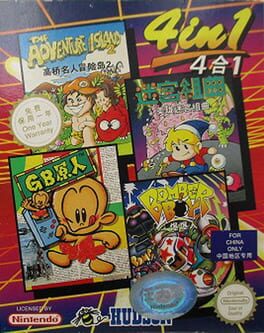
1995 •Game Boy
A licensed compilation of 4 Hudson Soft Game Boy titles in a single cartridge, distributed by Mani Ltd. Games included: - Adventure Island II: Alien...
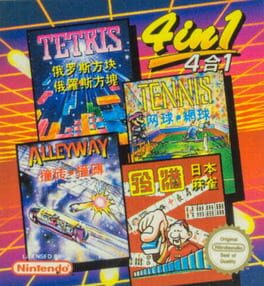
1995 •Game Boy
A licensed compilation of 4 Nintendo Game Boy titles in a single cartridge, distributed by Mani Ltd. Games included: - Tetris - Tennis - Alleyway - Y...
1994 •Game Boy
A version of Jeep Jamboree: Off Road Adventure without the Jeep brand license.

1997 •PlayStation 1
In 4-4-2 Soccer you'll need to bring all your leadership and football skills together. Control 25 attributes per player including strength, speed and...

1992 •Game Boy
4-in-1 Fun Pak is a compilation of board games that includes four different classic board games: chess, reversi, checkers, and backgammon.
1993 •Game Boy
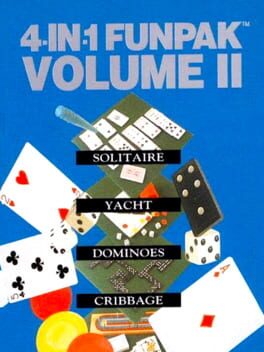
Now get four times the fun from your Gameboy system with 4-in-1 Funpak, Vol. II. If you like Yahtzee, you'll love Yacht. Cut the cards for hours of fu...
1997 •Game Boy
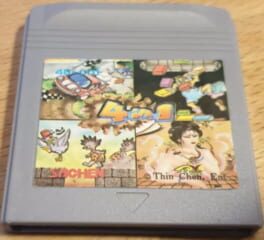
4-in-1 Version 1 was the first volume of 4-in-1 multicarts made by Sachen. It contains: Street Rider, Vex Block, Trap & Turn, and Duck Adventures.
1999 •Game Boy
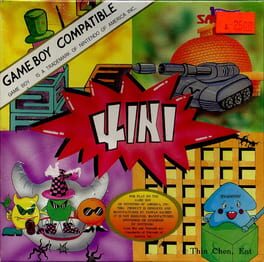
4-in-1 Version 2 was the second volume of 4-in-1 multicarts made by Sachen. It contains: Virus Attack, Electron World, Dice Square, and Trouble Zone.
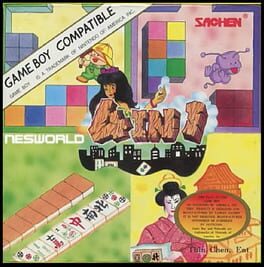
1999 •Game Boy
4-in-1 Version 3, also known as Commin 4-in-1, was the third volume of 4-in-1 multicarts made by Sachen. It contains: Taiwan's Mahjong, Japan's Mahjon...
Every answer is built from this console's own catalogue record. Where the record is empty, the answer says so rather than guessing.
The console database lists the PowKiddy X2 under the brand PowKiddy. It does not document whether the PowKiddy X2 is an officially licensed PowKiddy product.
The console database lists the release date as 2020 / 04 and the price as $80 for the PowKiddy X2.
The console database lists the system on a chip as RockChip RK3128, the CPU as Cortex-A7, and the RAM as 512 MB for the PowKiddy X2.
The console database lists the battery as 3000 mAh for the PowKiddy X2. The dimensions and the weight are not documented in the console database.
The console database gives the PowKiddy X2 a grade of B+ or better for 5 systems: Game Boy, Nintendo Entertainment System, Sega Genesis, Game Boy Advance, and Super Nintendo.
The marketplace rows shown for the PowKiddy X2 are search and marketplace links, not a verified live price feed. The console database does not verify live prices or stock, so check the linked marketplace listings for current availability.