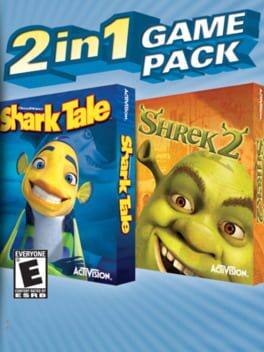
2 in 1 Game Pack: DreamWorks' Shark Tale + Shrek 2
Unknown year •Game Boy Advance
A compilation of two games based on DreamWorks animated movies on a single cartridge.
Tapwave Zodiac by Tapwave, now discontinued, Horizontal retro handheld, running Palm OS, powered by Motorola i.MX-1, with a 3.8 inch display


58 of 65 catalogued fields are filled in for this handheld. Anything the catalogue has not recorded is labelled Not documented rather than estimated.
Marketplace rows use affiliate-friendly links where available. Average price stays based on the console database, not live per-store pricing.
| Store | Price |
|---|---|
|
Amazon
Amazon search results
|
Discontinued |
|
AliExpress
AliExpress search results
|
Discontinued |
|
Alibaba
Alibaba search results
|
Discontinued |
Affiliate disclosure and terms are linked in the footer.
Budget shortlist candidate
This is a data-grounded review of Tapwave Zodiac, built around the hardware, the compatibility grades, the price band, and the devices most likely to tempt you away from it.
If your library leans toward Game Boy, NES, and Sega Genesis, Tapwave Zodiac immediately becomes more than just another line in a spreadsheet.
Before the review gets opinionated, here is the clean spec picture. This table is the reality check that keeps the rest of the write-up grounded.
| Category | Details |
|---|---|
| Brand | Tapwave |
| Release | 2003 |
| Form factor | Horizontal |
| Operating system | Palm OS |
| Overall performance | 4/10 · C+ |
| SoC | Motorola i.MX-1 |
| CPU | ARM920T, 1 Core, and 200 MHz |
| GPU | ATI Imageon W4200 |
| RAM | 10 MB SDRAM |
| Display | 3.8 inch, TFT Touchscreen, and 60 Hz |
| Resolution | 480 x 320, 3:2, and 151.81 PPI |
| Battery and cooling | 1540 mAh |
| Storage and I/O | 32 MB (Zodiac 1) 128 MB (Zodiac 2), Proprietary, and 3.5mm Headphone |
| Price | Discontinued |
If this review pulls you in, the fastest next rabbit hole is GP32 and Letcool N350JP / Defender MultiMix Magic / MiShark64, because those are the products most likely to clarify whether Tapwave Zodiac is your real match or just your current curiosity.
Tapwave Zodiac is described with battery: 1540 mAh. Those are not background details; they shape noise, comfort, endurance, and whether the device feels eager to be used or mildly exhausting to keep fed. Audio is covered by Dual Stereo Front facing and 3.5mm Headphone, which matters for sofa play, travel, and late-night sessions when speakers and headphone output can quietly make or break the experience.
Physically, the device is outlined by 142 mm x 79 mm x 14 mm, 180 grams, Plastic, and Slate Gray (Zodiac 1) Charcoal Gray (Zodiac 2). This is where you start picturing whether it is truly pocketable, only jacket-safe, or clearly a bag companion. The best portable devices earn their place in a routine. They are easy to reach for, easy to trust, and easy to put back down without feeling delicate.
The practical I/O story includes 32 MB (Zodiac 1) 128 MB (Zodiac 2), Bluetooth, Infrared, WiFi, and Proprietary. These details matter because many retro buyers are also collectors, tinkerers, dock-and-TV players, or people with large libraries that need sensible storage and transfer options.
Tapwave Zodiac is best framed as a machine for shoppers who want a focused retro machine with a clear role. That may sound obvious, but it is the difference between buying a handheld that becomes a habit and one that turns into a drawer resident.
The horizontal shape matters here because it changes comfort, portability, and the kind of nostalgia the device leans into. The fact that it runs Palm OS also affects what kind of setup work, app ecosystem, and tinkering ceiling buyers should expect.
The release timing listed as 2003 helps place it in context. In this market, timing changes expectations: a device that felt expensive at launch can look sharply judged six months later, while a newer device may need to justify a premium.
Retro handhelds are almost never judged in isolation; they are judged against the five other devices sitting one tab away in a buyer's browser.
The spreadsheet points shoppers toward Ebay for availability. That matters because storefront quality, shipping confidence, and after-sales expectations often shape the emotional experience of a purchase before the box even arrives.
Every handheld makes tradeoffs somewhere, even when the spreadsheet leaves them unstated. The smartest shortlist is usually the one that sees the flaw clearly and decides it is either acceptable or disqualifying before the credit card comes out.
| Console | Angle | Price | Performance | Why Click Through |
|---|---|---|---|---|
GP32 GamePark Holdings | Better Value | Discontinued | 4/10 · C+ | horizontal layout, rated 4/10 · C+. |
| Better Value | Discontinued | 4/10 · C+ | horizontal layout, rated 4/10 · C+. | |
GP2X GamePark Holdings | Better Value | Discontinued | 4/10 · C+ | horizontal layout, rated 4/10 · C+. |
GP2X Caanoo GamePark Holdings | Better Value | Discontinued | 4/10 · C+ | horizontal layout, rated 4/10 · C+. |
Tapwave Zodiac becomes much easier to judge once it is forced into the same room as GP32, Letcool N350JP / Defender MultiMix Magic / MiShark64, and GP2X. This is where a vague impression turns into a real buying decision, because each nearby rival throws a different kind of pressure on the table.
Tapwave Zodiac versus GP32 is interesting because better value is the obvious angle. If Tapwave Zodiac feels almost right but not quite, GP32 is the sort of nearby detour that can completely change the shortlist. Its overall rating is 4/10 · C+. More importantly, tapwave Zodiac versus Letcool N350JP / Defender MultiMix Magic / MiShark64 is interesting because better value is the obvious angle. Compared with Tapwave Zodiac, Letcool N350JP / Defender MultiMix Magic / MiShark64 makes the more obvious play for readers who care about better value. That said, tapwave Zodiac versus GP2X is interesting because better value is the obvious angle. GP2X sits close enough to Tapwave Zodiac to make the comparison meaningful, but different enough to sharpen the buying decision.
The real benefit of this comparison set is not that it declares a single winner. It reveals which compromise profile feels least annoying over time.
Tapwave Zodiac pairs the hardware with 3.8 inch, TFT Touchscreen, 60 Hz, 480 x 320, 3:2, and 151.81 PPI. That is the kind of detail stack retro buyers should linger on, because a handheld can be technically capable and still feel wrong if the aspect ratio, sharpness, and scaling story are off. The screen protection is listed as Plastic, a small clue that often hints at how polished or rough the front face might feel in daily use.
The controls are described with Single thumbstick Upper placement, 4 Buttons, L1, R1, and Bluetooth, Home, Power, Reset, Select. That matters more than many spec sheets admit, because the difference between a fun handheld and a fatiguing one often shows up in the D-pad, shoulder shape, and how naturally the thumbs settle into place. This is where a retro handheld stops being abstract and starts becoming a piece of physical furniture for your hands.
The 3:2 aspect ratio adds another layer to the story. The right screen is not always the fanciest one. Sometimes it is the one that makes your core library look natural instead of merely possible.
The heart of the machine is the Motorola i.MX-1. CPU duties are handled by ARM920T. Graphics are handled by ATI Imageon W4200. Memory is listed at 10 MB SDRAM. The sheet rates the overall performance at 4/10 · C+, or roughly 2 on the normalized scale.
The CPU side is described with 1 Core, 1 Thread, and 200 MHz, which is more useful than brand names alone because it hints at how much headroom the handheld should have before emulator tuning gets annoying. On the graphics side, ARM helps sketch the ceiling for heavier systems, upscale experiments, and shader curiosity.
Tapwave Zodiac looks strongest with Game Boy (A), NES (A), Sega Genesis (B), Game Boy Advance (B), and Super Nintendo (B+), which gives the review something more tangible than a vague "good for retro" verdict. The listed emulation limit, NES, GBA, SMS run fine, SNES playable but usually laggy, is the kind of line buyers should actually respect because it tells you where the romance ends and the compromise begins.
If there is a weakness here, it is not necessarily fatal. It simply means the smartest pitch for this handheld is often the honest one: let it own the systems it handles confidently and do not pretend it is built to brute-force every wish list.
Tapwave Zodiac leaves the strongest impression when you frame it as a recommendation for shoppers who want a focused retro machine with a clear role. That is the lens that makes the strengths feel intentional instead of accidental.
Budget shortlist candidate is not just a catchy label here. It is the cleanest shorthand for why this device deserves attention. The compatibility profile around Game Boy (A), NES (A), Sega Genesis (B), and Game Boy Advance (B) gives it a concrete identity.
If the device sparks your interest, the smartest next click is usually GP32, followed by Letcool N350JP / Defender MultiMix Magic / MiShark64, because that is where the shape of the market around it comes into focus. That is what a good review should do: not close the conversation, but sharpen the next choice.
Games shown here match systems this handheld can run at a B grade or better.
Unknown year •Game Boy Advance
A compilation of two games based on DreamWorks animated movies on a single cartridge.
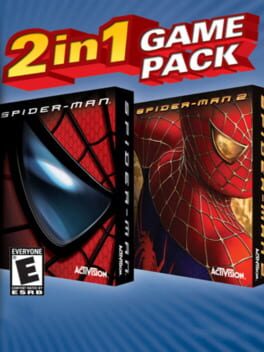
2005 •Game Boy Advance
A compilation of two Spider-Man games on the Game Boy Advance.

Unknown year •Game Boy Advance
A compilation of two extreme sports games on a single cartridge.
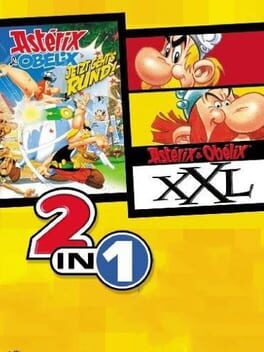
2005 •Game Boy Advance
Asterix & Obelix: Bash Them All! is a 2D side-scrolling platform game based on the French comic series Astérix. It is a collection of two games. One o...

Unknown year •Game Boy Advance
Game details are still being synced from IGDB.

2005 •Game Boy Advance
2 in 1: V-Rally 3 + Stuntman is a compilation of games developed by Velez & Dubail and published by Atari Europe for the Game Boy Advance. The game c...

2005 •Game Boy Advance
A compilation of two French exclusive action games on a single cartridge.
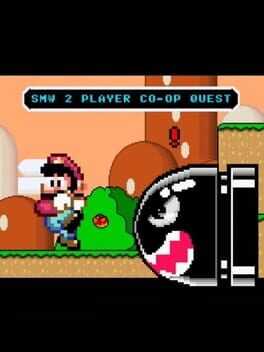
2013 •Super Nintendo
2 Player Co-op Quest! is a short ROMhack of Super Mario World, in which the second player assumes the control of the enemies. There are 8 exits, and 2...
2006 •Game Boy Advance
Game details are still being synced from IGDB.
2008 •Nintendo Entertainment System
Get the first games in the Sivak line on one cart, Geminim and Siamond! In this multicart, you'll be able to experience the first two games by Sivak...
2024 •Super Nintendo
Game details are still being synced from IGDB.
2024 •Super Nintendo
Game details are still being synced from IGDB.
Every answer is built from this console's own catalogue record. Where the record is empty, the answer says so rather than guessing.
The console database lists the Tapwave Zodiac under the brand Tapwave. It does not document whether the Tapwave Zodiac is an officially licensed Tapwave product.
The console database lists the release date as 2003 and the price as Discontinued for the Tapwave Zodiac.
The console database lists the system on a chip as Motorola i.MX-1, the CPU as ARM920T, and the RAM as 10 MB SDRAM for the Tapwave Zodiac.
The console database lists the dimensions as 142 mm x 79 mm x 14 mm, the weight as 180 grams, and the battery as 1540 mAh for the Tapwave Zodiac.
The console database gives the Tapwave Zodiac a grade of B+ or better for 3 systems: Game Boy, Nintendo Entertainment System, and Super Nintendo.
The marketplace rows shown for the Tapwave Zodiac are search and marketplace links, not a verified live price feed. The console database does not verify live prices or stock, so check the linked marketplace listings for current availability.