OneGx1
OneGx1 by One Netbook, priced around $840, Clamshell (Modular) retro handheld, running Windows 10, powered by Intel Core i5-10210Y, with a 7.0 inch display

View more photos


Specifications
62 of 65 catalogued fields are filled in for this handheld. Anything the catalogue has not recorded is labelled Not documented rather than estimated.
Identity
- Brand
- One Netbook
- Release Date
- 2020 / 08
- Price
- $840 - $1210
- Pricing category
- $700 - $2000
Form factor & shell
- Form Factor
- Clamshell (Modular)
- Shell material
- Metal (Aluminum)
- Colors
- Light Blue
- Dimensions
- 173 mm x 136 mm x 21 mm
- Weight
- 749 grams
- Cooling
- Not documented
Operating system
- Operating System
- Windows 10
Performance
- System on a Chip
- Intel Core i5-10210Y
- CPU
- Intel Comet Lake-Y
- CPU cores
- 4 Cores
- CPU threads
- 8 Threads
- CPU clock speed
- 0.6 GHz - 4.0 GHz
- Architecture
- x86-64
- GPU
- Intel UHD Graphics 617 (24 EU)
- GPU cores
- Not documented
- GPU clock speed
- 300 MHz - 1.05 GHz
- RAM
- 8 GB / 16 GB DDR3
- Performance rating
- 6/10 · B
Display
- Screen size
- 7.0 inch
- Screen type
- IPS Touchscreen
- Resolution
- 1920 x 1200
- PPI
- 323.45 PPI
- Aspect ratio
- 16:10
- Screen refresh rate
- 60 Hz
- Screen lens
- Tempered Glass
Battery & charging
- Battery
- 12,000 mAh
- Charge port
- USB-C x2
- Storage
- Internal 256 / 512 GB M.2 SSD & External MicroSD
Controls
- D-pad
- Separated Buttons Lower placement
- Analogs
- Dual thumbsticks with L3/R3 Left: Upper placement Right: Lower placement
- Face buttons
- 4 Buttons
- Shoulder buttons
- L1, R1, L2, R2 Vertical
- Extra buttons
- Full QWERTY keyboard
- Rumble
- Not documented
- Volume control
- Dedicated Buttons
- Brightness control
- Dedicated Buttons
- Power control
- Button
Connectivity
- Connectivity
- 4G/5G, WiFi, Bluetooth, USB-A
- Video output
- Micro HDMI
- Audio output
- 3.5mm Headphone
- Speaker
- Dual Stereo Front edge facing
- Sensors
- Microphone
Emulation grades
- Game Boy
- A
- Nintendo Entertainment System
- A
- Sega Genesis
- A
- Game Boy Advance
- A
- Super Nintendo
- A
- PlayStation 1
- A
- Nintendo DS
- A
- Nintendo 64
- A
- Dreamcast
- A
- PSP
- A
- Sega Saturn
- A
- GameCube
- B
- Wii
- C
- Nintendo 3DS
- B
- PlayStation 2
- C
- Wii U
- D
- Nintendo Switch
- D
- PlayStation 3
- D
- Emulation limit
- Gamecube, Wii
Where To Buy
Marketplace rows use affiliate-friendly links where available. Average price stays based on the console database, not live per-store pricing.
| Store | Price |
|---|---|
|
Amazon
Amazon search results
|
$840 - $1210 |
|
Aliexpress
Imported from spreadsheet hyperlink
|
$840 - $1210 |
|
Alibaba
Alibaba search results
|
$840 - $1210 |
Affiliate disclosure and terms are linked in the footer.
One Netbook OneGx1 review: the data-backed case for putting it on your radar
Broad emulation range
This is a data-grounded review of OneGx1, built around the hardware, the compatibility grades, the price band, and the devices most likely to tempt you away from it.
OneGx1 looks most interesting when you treat it as a specific answer to a specific kind of retro player, not as a mythical one-device-for-everyone machine.
Best For
- Shoppers who want a focused retro machine with a clear role.
- Best fit for Game Boy (A), NES (A), and Sega Genesis (A).
- Designed around a clamshell (modular) handheld shape.
Why It Hooks You
- IPS Touchscreen display story helps define the vibe.
- Current price context is $840 - $1210.
Watch Outs
- Some systems, including Wii (C) and PlayStation 2 (C), may need more tuning.
Spec Snapshot
Before the review gets opinionated, here is the clean spec picture. This table is the reality check that keeps the rest of the write-up grounded.
| Category | Details |
|---|---|
| Brand | One Netbook |
| Release | 2020 / 08 |
| Form factor | Clamshell (Modular) |
| Operating system | Windows 10 |
| Overall performance | 6/10 · B |
| SoC | Intel Core i5-10210Y |
| CPU | Intel Comet Lake-Y, 4 Cores, and 0.6 GHz - 4.0 GHz |
| GPU | Intel UHD Graphics 617 (24 EU) and 300 MHz - 1.05 GHz |
| RAM | 8 GB / 16 GB DDR3 |
| Display | 7.0 inch, IPS Touchscreen, and 60 Hz |
| Resolution | 1920 x 1200, 16:10, and 323.45 PPI |
| Battery and cooling | 12,000 mAh |
| Storage and I/O | Internal 256 / 512 GB M.2 SSD & External MicroSD, USB-C x2, Micro HDMI, and 3.5mm Headphone |
| Price | $840 - $1210 |
If this review pulls you in, the fastest next rabbit hole is OneGx1 Pro and GPD Win 2 (2019 Model), because those are the products most likely to clarify whether OneGx1 is your real match or just your current curiosity.
Display and Ergonomics
OneGx1 pairs the hardware with 7.0 inch, IPS Touchscreen, 60 Hz, 1920 x 1200, 16:10, and 323.45 PPI. That is the kind of detail stack retro buyers should linger on, because a handheld can be technically capable and still feel wrong if the aspect ratio, sharpness, and scaling story are off. The screen protection is listed as Tempered Glass, a small clue that often hints at how polished or rough the front face might feel in daily use.
The controls are described with Separated Buttons Lower placement, Dual thumbsticks with L3/R3 Left: Upper placement Right: Lower placement, 4 Buttons, L1, R1, L2, R2 Vertical, and Full QWERTY keyboard. That matters more than many spec sheets admit, because the difference between a fun handheld and a fatiguing one often shows up in the D-pad, shoulder shape, and how naturally the thumbs settle into place. A device can run a game and still fail the vibe test if the controls feel like an afterthought.
The 16:10 aspect ratio adds another layer to the story. Some buyers want sharp all-purpose flexibility, others want a screen that flatters the systems they actually play most. Good reviews should make that tradeoff visible instead of pretending every resolution solves every problem.
How It Lives Beyond The Spec Sheet
OneGx1 is described with battery: 12,000 mAh. Those are not background details; they shape noise, comfort, endurance, and whether the device feels eager to be used or mildly exhausting to keep fed. Audio is covered by Dual Stereo Front edge facing and 3.5mm Headphone, which matters for sofa play, travel, and late-night sessions when speakers and headphone output can quietly make or break the experience.
Physically, the device is outlined by 173 mm x 136 mm x 21 mm, 749 grams, Metal (Aluminum), and Light Blue. This is where you start picturing whether it is truly pocketable, only jacket-safe, or clearly a bag companion. The best portable devices earn their place in a routine. They are easy to reach for, easy to trust, and easy to put back down without feeling delicate.
The practical I/O story includes Internal 256 / 512 GB M.2 SSD & External MicroSD, 4G/5G, WiFi, Bluetooth, USB-A, USB-C x2, and Micro HDMI. These details matter because many retro buyers are also collectors, tinkerers, dock-and-TV players, or people with large libraries that need sensible storage and transfer options.
Where The Hardware Should Hold Up
The heart of the machine is the Intel Core i5-10210Y. CPU duties are handled by Intel Comet Lake-Y. Graphics are handled by Intel UHD Graphics 617 (24 EU). Memory is listed at 8 GB / 16 GB DDR3.
The CPU side is described with 4 Cores, 8 Threads, and 0.6 GHz - 4.0 GHz, which is more useful than brand names alone because it hints at how much headroom the handheld should have before emulator tuning gets annoying. On the graphics side, 300 MHz - 1.05 GHz and x86-64 helps sketch the ceiling for heavier systems, upscale experiments, and shader curiosity.
OneGx1 looks strongest with Game Boy (A), NES (A), Sega Genesis (A), Game Boy Advance (A), Super Nintendo (A), and PlayStation 1 (A), which gives the review something more tangible than a vague "good for retro" verdict. The listed emulation limit, Gamecube, Wii, is the kind of line buyers should actually respect because it tells you where the romance ends and the compromise begins.
The middle tier of compatibility, including Wii (C) and PlayStation 2 (C), is where the buyer needs some honesty. These are usually the systems that separate a casual dabbler from a user who is happy tweaking emulator settings, testing cores, or accepting the occasional rough edge.
If You Are Comparing It To Nearby Rivals
| Console | Angle | Price | Performance | Why Click Through |
|---|---|---|---|---|
OneGx1 Pro One Netbook | Brand Neighbor | $1200 (Pre-order), $1400 (Retail) | 2/10 · C- | same operating system, clamshell (modular) layout, tracked around $1200 (Pre-order), $1400 (Retail). |
GPD Win 2 (2019 Model) GamePad Digital | Smaller Alternative | $775 | 6/10 · B | same operating system, tracked around $775. |
GPD Win Max GamePad Digital | More Powerful | $779 (Pre-order price) $999 (retail) | 8/10 · A- | same operating system, tracked around $779 (Pre-order price) $999 (retail). |
MSI Claw A1M MSI | Better Value | $699 (Core Ultra 5) / $799 (Core Ultra 7) | 6/10 · B | tracked around $699 (Core Ultra 5) / $799 (Core Ultra 7). |
OneGx1 becomes much easier to judge once it is forced into the same room as OneGx1 Pro, GPD Win 2 (2019 Model), and GPD Win Max. This is where a vague impression turns into a real buying decision, because each nearby rival throws a different kind of pressure on the table.
OneGx1 versus OneGx1 Pro is interesting because brand neighbor is the obvious angle. OneGx1 Pro sits close enough to OneGx1 to make the comparison meaningful, but different enough to sharpen the buying decision. OneGx1 Pro is tracked around $1200 (Pre-order), $1400 (Retail). OneGx1 versus GPD Win 2 (2019 Model) is interesting because smaller alternative is the obvious angle. GPD Win 2 (2019 Model) sits close enough to OneGx1 to make the comparison meaningful, but different enough to sharpen the buying decision. In practice, gPD Win 2 (2019 Model) is tracked around $775. In practice, oneGx1 versus GPD Win Max is interesting because more powerful is the obvious angle. Compared with OneGx1, GPD Win Max makes the more obvious play for readers who care about more powerful. GPD Win Max is tracked around $779 (Pre-order price) $999 (retail).
Comparison is the antidote to spec-sheet hypnosis. Once you stack the neighbors side by side, you stop asking which one is objectively best and start asking which one is best for your habits.
How To Read This Device
OneGx1 is best framed as a machine for shoppers who want a focused retro machine with a clear role. The smartest handheld purchases usually happen when the buyer matches the hardware to a play style instead of falling for the loudest marketing line.
The clamshell (modular) shape matters here because it changes comfort, portability, and the kind of nostalgia the device leans into. The fact that it runs Windows 10 also affects what kind of setup work, app ecosystem, and tinkering ceiling buyers should expect.
The release timing listed as 2020 / 08 helps place it in context. In this market, timing changes expectations: a device that felt expensive at launch can look sharply judged six months later, while a newer device may need to justify a premium.
Price, Availability, and Value Pressure
OneGx1 is currently tracked around $840 - $1210 and lands in the $700 - $2000 pricing band. This category is ruthless about value perception. A handheld can be beloved at one price and impossible to defend at another.
The spreadsheet points shoppers toward Amazon and Aliexpress for availability. That matters because storefront quality, shipping confidence, and after-sales expectations often shape the emotional experience of a purchase before the box even arrives.
Every handheld makes tradeoffs somewhere, even when the spreadsheet leaves them unstated. Good buying advice is not about pretending the downsides do not exist; it is about deciding whether the downsides land in the part of the experience you personally care about.
Where The Recommendation Lands
OneGx1 leaves the strongest impression when you frame it as a recommendation for shoppers who want a focused retro machine with a clear role. That framing keeps the review honest and stops the verdict from sliding into generic praise.
Broad emulation range is not just a catchy label here. It is the cleanest shorthand for why this device deserves attention. The compatibility profile around Game Boy (A), NES (A), Sega Genesis (A), and Game Boy Advance (A) gives it a concrete identity.
If the device sparks your interest, the smartest next click is usually OneGx1 Pro, followed by GPD Win 2 (2019 Model), because that is where the shape of the market around it comes into focus. That is what a good review should do: not close the conversation, but sharpen the next choice.
Playable Games
Games shown here match systems this handheld can run at a B grade or better.

Zap! Snowboarding Trix
1997 •Sega Saturn
Zap! Snowboarding Trix is a Sega Saturn sports game released exclusively in Japan. It was followed by Zap! Snowboarding Trix '98.
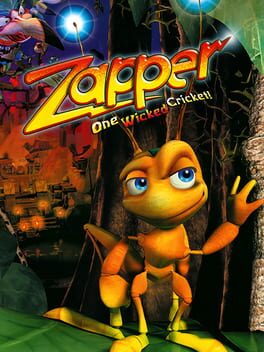
Zapper: One Wicked Cricket!
2002 •GameCube, PlayStation 2
Zapper is an action-packed and addictive game that starts with the 'avoid-em-up' game play mechanics of Blitz Games' own Frogger 2: Swampy's Revenge,...

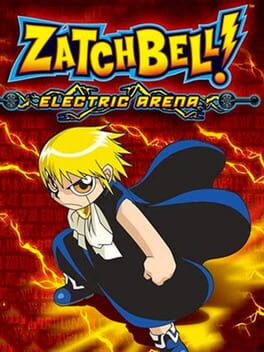
Zatch Bell! Electric Arena
2003 •Game Boy Advance
Zatch Bell! Electric Arena is a fighting game based on the Zatch Bell! anime/manga that was released on Game Boy Advance in the U.S. and Japan. It was...

Zatch Bell! Mamodo Battles
2005 •GameCube, PlayStation 2
Zatch Bell! Mamodo Battles is a 3D fighting video game for the PlayStation 2 and GameCube that was published by Bandai in 2005 and is the third game o...

Zatch Bell! Mamodo Fury
2004 •GameCube, PlayStation 2
Zatch Bell! Mamodo Fury is a fighting game released by Bandai in 2004. In 2006 the game was released in North America by Namco Bandai Games, and a Gam...

Zatch Bell! Mamodo Fury Update
Unknown year •GameCube
Game details are still being synced from IGDB.

Zathura
2005 •Game Boy Advance, PlayStation 2
The intergalactic journey begins when a mysterious board game thrusts the house of two young brothers, Walter and Danny, into outer space. Battle dead...

ZeiramZone
1996 •PlayStation 1
Horizontal scrolling action based on the popular "Zeiram" special effects movie directed by Keita Amemiya. By using the 3D polygon characters and back...
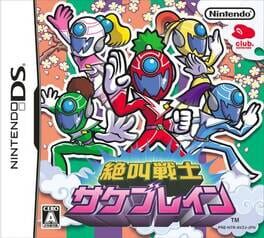
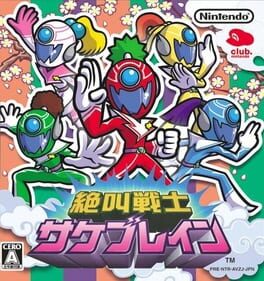
Zekkyou Senshi: Sakeburein
2007 •Nintendo DS
Zekkyō Senshi Sakeburein was a Nintendo DS game exclusively available to Club Nintendo members in Japan. This quirky multiplayer beat'em up forced pla...
OneGx1 — Frequently Asked Questions
Every answer is built from this console's own catalogue record. Where the record is empty, the answer says so rather than guessing.
Is the OneGx1 an official One Netbook product?
The console database lists the OneGx1 under the brand One Netbook. It does not document whether the OneGx1 is an officially licensed One Netbook product.
When was the OneGx1 released, and what does it cost?
The console database lists the release date as 2020 / 08 and the price as $840 - $1210 for the OneGx1.
What chipset and how much RAM does the OneGx1 have?
The console database lists the system on a chip as Intel Core i5-10210Y, the CPU as Intel Comet Lake-Y, and the RAM as 8 GB / 16 GB DDR3 for the OneGx1.
What are the OneGx1's dimensions, weight and battery?
The console database lists the dimensions as 173 mm x 136 mm x 21 mm, the weight as 749 grams, and the battery as 12,000 mAh for the OneGx1.
Which systems can the OneGx1 emulate well?
The console database gives the OneGx1 a grade of B+ or better for 11 systems: Game Boy, Nintendo Entertainment System, Sega Genesis, Game Boy Advance, Super Nintendo, PlayStation 1, Nintendo DS, Nintendo 64, Dreamcast, PSP, and Sega Saturn.
Where can I buy the OneGx1?
The marketplace rows shown for the OneGx1 are search and marketplace links, not a verified live price feed. The console database does not verify live prices or stock, so check the linked marketplace listings for current availability.
Sources & Editorial Notes
- Specifications are taken from this handheld's entry in the Lost In Consoles catalogue, which is compiled from manufacturer documentation and public filings. How we compile device data.
- Empty fields are published as Not documented. Nothing on this page is estimated, inferred or carried over from a similar device.
- Spotted an error? Send a correction.