
Adventures in the Magic Kingdom: Sora Edition
2015 •Nintendo Entertainment System
A hackrom of Adventures in the Magic Kingdom
GPD XD+ by GamePad Digital, Clamshell retro handheld, running Android 7.0, powered by MediaTek MTK8176, with a 5.0 inch display, priced around 200.0


Marketplace rows use affiliate-friendly links where available. Average price stays based on the console database, not live per-store pricing.
| Store | Price |
|---|---|
|
Aliexpress
Imported from spreadsheet hyperlink
|
200.0 |
|
Amazon
Amazon search results
|
200.0 |
|
Alibaba
Alibaba search results
|
200.0 |
Affiliate disclosure and terms are linked in the footer.
Broad emulation range
GPD XD+ from GamePad Digital is the kind of retro handheld that makes sense only once you stop reading the spec sheet like a trophy case and start reading it like a buyer.
GPD XD+ is not trying to win every argument at once; its appeal lives in the balance between emulation comfort, day-to-day usability, and whether its price still feels sane.
Before the review gets opinionated, here is the clean spec picture. This table is the reality check that keeps the rest of the write-up grounded.
| Category | Details |
|---|---|
| Brand | GamePad Digital |
| Release | 2018.0 |
| Form factor | Clamshell |
| Operating system | Android 7.0 |
| Overall performance | ⭐️⭐️⭐️⭐️⭐️ |
| SoC | MediaTek MTK8176 |
| CPU | Cortex-A72, Cortex-A53 (2x / 4x), 6 Cores, and 2.1 GHz |
| GPU | PowerVR GX6250 and 700 MHz |
| RAM | 4 GB DDR3 |
| Display | 5.0 inch, IPS Touchscreen, and 60 Hz |
| Resolution | 1280 x 720, 16:9, and 293.72 PPI |
| Battery and cooling | 6000 mAh |
| Storage and I/O | Internal 16/32/64 GB & External MicroSD, Micro USB, Mini HDMI, and 3.5mm Headphone |
| Price | 200.0 |
If this review pulls you in, the fastest next rabbit hole is PowKiddy X18 and Retroid Pocket Flip 2, because those are the products most likely to clarify whether GPD XD+ is your real match or just your current curiosity.
The heart of the machine is the MediaTek MTK8176. CPU duties are handled by Cortex-A72, Cortex-A53 (2x / 4x). Graphics are handled by PowerVR GX6250. Memory is listed at 4 GB DDR3. The sheet rates the overall performance at ⭐️⭐️⭐️⭐️⭐️, or roughly 5 on the normalized scale.
The CPU side is described with 6 Cores, 6 Threads, and 2.1 GHz, which is more useful than brand names alone because it hints at how much headroom the handheld should have before emulator tuning gets annoying. On the graphics side, 700 MHz and ARM helps sketch the ceiling for heavier systems, upscale experiments, and shader curiosity.
GPD XD+ looks strongest with Game Boy (A), NES (A), Sega Genesis (A), Game Boy Advance (A), Super Nintendo (A), and PlayStation 1 (A), which gives the review something more tangible than a vague "good for retro" verdict. The listed emulation limit, SNES FX & 3D PS1 (60 FPS), Dreamcast, Saturn & N64 (playable), PSP (most run fine but some are unplayable), Gamecube (mostly unplayable), is the kind of line buyers should actually respect because it tells you where the romance ends and the compromise begins.
The middle tier of compatibility, including PSP (C) and Sega Saturn (C), is where the buyer needs some honesty. These are usually the systems that separate a casual dabbler from a user who is happy tweaking emulator settings, testing cores, or accepting the occasional rough edge.
GPD XD+ is currently tracked around 200.0 and lands in the $200 - $300 pricing band. Retro handhelds are almost never judged in isolation; they are judged against the five other devices sitting one tab away in a buyer's browser.
The spreadsheet points shoppers toward Aliexpress and Amazon for availability. That matters because storefront quality, shipping confidence, and after-sales expectations often shape the emotional experience of a purchase before the box even arrives. The listed strengths orbit around powerful.
The tradeoffs are not buried, either: the sheet flags price. That is why value is always a conversation between specs and priorities. There is no universal bargain, only a good fit at the right moment.
GPD XD+ pairs the hardware with 5.0 inch, IPS Touchscreen, 60 Hz, 1280 x 720, 16:9, and 293.72 PPI. That is the kind of detail stack retro buyers should linger on, because a handheld can be technically capable and still feel wrong if the aspect ratio, sharpness, and scaling story are off. The screen protection is listed as Plastic, a small clue that often hints at how polished or rough the front face might feel in daily use.
The controls are described with Cross Middle, inner placement, Dual thumbsticks Upper, outer placement, 4 Buttons, L1, R1, L2, R2 Horizontal, and L3, R3, Power, Volume +-, Back, Home, Menu, Games. That matters more than many spec sheets admit, because the difference between a fun handheld and a fatiguing one often shows up in the D-pad, shoulder shape, and how naturally the thumbs settle into place. A device can run a game and still fail the vibe test if the controls feel like an afterthought.
The 16:9 aspect ratio adds another layer to the story. Some buyers want sharp all-purpose flexibility, others want a screen that flatters the systems they actually play most. Good reviews should make that tradeoff visible instead of pretending every resolution solves every problem.
| Console | Angle | Price | Performance | Why Click Through |
|---|---|---|---|---|
PowKiddy X18 PowKiddy | Closest Match | 100.0 | ⭐️⭐️⭐️⭐️ | same operating system, clamshell layout, tracked around 100.0. |
Retroid Pocket Flip 2 Retroid / Moorechip | Closest Match | $189 (D1100) $219 (SD865) | ????½ | clamshell layout, tracked around $189 (D1100) $219 (SD865), rated ????½. |
GPD XD GamePad Digital | Brand Neighbor | Discontinued | ⭐️⭐️⭐️⭐️¼ | clamshell layout, tracked around Discontinued, rated ⭐️⭐️⭐️⭐️¼. |
DragonBox Pyra OpenPandora GmbH | Closest Match | $654 - $820 | ⭐️⭐️⭐️⭐️¾ | clamshell layout, tracked around $654 - $820, rated ⭐️⭐️⭐️⭐️¾. |
GPD XD+ becomes much easier to judge once it is forced into the same room as PowKiddy X18, Retroid Pocket Flip 2, and GPD XD. This is where a vague impression turns into a real buying decision, because each nearby rival throws a different kind of pressure on the table.
GPD XD+ versus PowKiddy X18 is interesting because closest match is the obvious angle. If GPD XD+ feels almost right but not quite, PowKiddy X18 is the sort of nearby detour that can completely change the shortlist. PowKiddy X18 is tracked around 100.0. Its overall rating is ⭐️⭐️⭐️⭐️. From another angle, gPD XD+ versus Retroid Pocket Flip 2 is interesting because closest match is the obvious angle. Compared with GPD XD+, Retroid Pocket Flip 2 makes the more obvious play for readers who care about closest match. Retroid Pocket Flip 2 is tracked around $189 (D1100) $219 (SD865). From another angle, its overall rating is ????½. That said, gPD XD+ versus GPD XD is interesting because brand neighbor is the obvious angle. From another angle, compared with GPD XD+, GPD XD makes the more obvious play for readers who care about brand neighbor. GPD XD is tracked around Discontinued. That said, its overall rating is ⭐️⭐️⭐️⭐️¼.
A handheld earns a place in the shortlist when it can survive comparison without needing excuses. That is the standard this section is really applying.
GPD XD+ is described with battery: 6000 mAh. Those are not background details; they shape noise, comfort, endurance, and whether the device feels eager to be used or mildly exhausting to keep fed. Audio is covered by Dual Stereo Upward facing and 3.5mm Headphone, which matters for sofa play, travel, and late-night sessions when speakers and headphone output can quietly make or break the experience.
Physically, the device is outlined by 155 mm x 89 mm x 24 mm, 300.0, Plastic, and Black. This is where you start picturing whether it is truly pocketable, only jacket-safe, or clearly a bag companion. Buyers often underestimate how much daily affection is driven by the little things: where the ports sit, how the shell feels, and whether the handheld seems built for real use instead of product photos.
The practical I/O story includes Internal 16/32/64 GB & External MicroSD, Bluetooth, WiFi, Micro USB, and Mini HDMI. These details matter because many retro buyers are also collectors, tinkerers, dock-and-TV players, or people with large libraries that need sensible storage and transfer options.
GPD XD+ is best framed as a machine for buyers who want a serious all-rounder with room for tougher systems. The smartest handheld purchases usually happen when the buyer matches the hardware to a play style instead of falling for the loudest marketing line.
The clamshell shape matters here because it changes comfort, portability, and the kind of nostalgia the device leans into. The fact that it runs Android 7.0 also affects what kind of setup work, app ecosystem, and tinkering ceiling buyers should expect.
The release timing listed as 2018.0 helps place it in context. Context matters because buyers are not comparing isolated products; they are comparing moments in the market.
GPD XD+ leaves the strongest impression when you frame it as a recommendation for buyers who want a serious all-rounder with room for tougher systems. That is the lens that makes the strengths feel intentional instead of accidental.
Broad emulation range is not just a catchy label here. It is the cleanest shorthand for why this device deserves attention. The compatibility profile around Game Boy (A), NES (A), Sega Genesis (A), and Game Boy Advance (A) gives it a concrete identity. The main caution remains price.
If the device sparks your interest, the smartest next click is usually PowKiddy X18, followed by Retroid Pocket Flip 2, because that is where the shape of the market around it comes into focus. A useful verdict should leave the reader more curious, but also more precise.
Games shown here match systems this handheld can run at a B grade or better.
2015 •Nintendo Entertainment System
A hackrom of Adventures in the Magic Kingdom
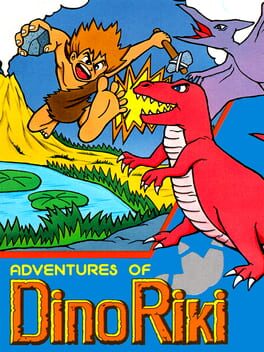
1987 •Nintendo Entertainment System
Adventures of Dino Riki is an overhead shooter created by Hudson Soft, similar to games like 1943: The Battle of Midway, where the object is to dodge...
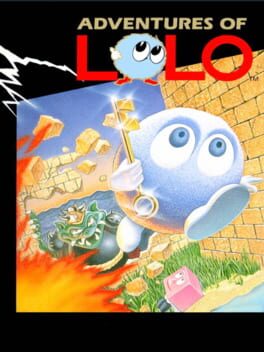
1989 •Nintendo 3DS, Nintendo Entertainment System, Wii, Wii U
Adventures of Lolo is a puzzle game released in 1989 by HAL Corporation for the Nintendo Entertainment System. It is based on the Japanese Eggerland v...

1990 •Nintendo Entertainment System, Wii
Our hero Lolo has charmed and enchanted puzzle-loving game players around the world with his unfailing courage and plucky persistence - and now he's o...

1991 •Nintendo Entertainment System
The journey continues! The game preferred by the best and the brightest is back with a brand new installment. See if you qualify! Seventeen levels, o...

2007 •Nintendo DS, PlayStation 2, Wii
Adventures of Pinocchio is a video game, released for the Nintendo DS and Wii on May 8, 2009, developed and published by the now-defunct company Phoen...

1989 •Nintendo Entertainment System
Adventures of Tom Sawyer is a platformer game released for the Nintendo Entertainment System in 1989. The storyline does not directly portray the book...

1994 •Sega Genesis, Super Nintendo
When Yogi Bear catches wind of a plan to turn Jellystone Park into a Chemical plant he sets out on a mission to stop it. Play as Yogi in this side-scr...

1998 •Sega Genesis
Adventurous Boy: Màoxiǎn Xiǎozi is an unlicensed Fantasy Zone clone, though features completely original graphics and sound.
2007 •Nintendo DS
Four minigames includes: - Breakout. - Firemen. - Maze game. - Invaders DS.

1990 •Sega Genesis
Aero Blasters: Trouble Specialty Raid Unit is a 1990 horizontally scrolling shoot 'em up video game developed and published by Kaneko and licensed to...

2000 •Dreamcast
Both Aero Dancing F and i received follow-up titles, with Aero Dancing F: Todoroki Tsubasa no Hatsu Hikou (2000) and Aero Dancing i: Jikai Saku Made M...