GPD Q9
GPD Q9 by GamePad Digital, now discontinued, Horizontal retro handheld, running Android 4.4, powered by Rockchip RK3288, with a 7.0 inch display

View more photos


Specifications
60 of 65 catalogued fields are filled in for this handheld. Anything the catalogue has not recorded is labelled Not documented rather than estimated.
Identity
- Brand
- GamePad Digital
- Release Date
- 2014
- Price
- Discontinued
- Pricing category
- Discontinued
Form factor & shell
- Form Factor
- Horizontal
- Shell material
- Plastic
- Colors
- Black
- Dimensions
- Not documented
- Weight
- Not documented
- Cooling
- Not documented
Operating system
- Operating System
- Android 4.4
Performance
- System on a Chip
- Rockchip RK3288
- CPU
- Cortex-A17
- CPU cores
- 4 Cores
- CPU threads
- 4 Threads
- CPU clock speed
- 1.6 GHz - 1.8 GHz
- Architecture
- ARM
- GPU
- Mali-T764
- GPU cores
- 4 Cores
- GPU clock speed
- 600 MHz
- RAM
- 2 GB DDR3
- Performance rating
- 8.5/10 · A-
Display
- Screen size
- 7.0 inch
- Screen type
- IPS Touchscreen
- Resolution
- 1024 x 600
- PPI
- 169.55 PPI
- Aspect ratio
- 16:9
- Screen refresh rate
- 60 Hz
- Screen lens
- Not documented
Battery & charging
- Battery
- 5000 mAh
- Charge port
- Micro USB Top facing
- Storage
- Internal 4 GB, External MicroSD
Controls
- D-pad
- Disc Lower placement
- Analogs
- Dual thumbsticks Upper placement
- Face buttons
- 4 Buttons
- Shoulder buttons
- L1, R1, L2, R2 Horizontal
- Extra buttons
- Power, Volume +-
- Rumble
- Not documented
- Volume control
- Dedicated Buttons
- Brightness control
- Menu
- Power control
- Button
Connectivity
- Connectivity
- WiFI 3
- Video output
- Mini HDMI Top facing
- Audio output
- 3.5mm Headphone Top facing
- Speaker
- Dual Stereo Front facing
- Sensors
- Front camera
Emulation grades
- Game Boy
- A
- Nintendo Entertainment System
- A
- Sega Genesis
- A
- Game Boy Advance
- A
- Super Nintendo
- A
- PlayStation 1
- A
- Nintendo DS
- C
- Nintendo 64
- B
- Dreamcast
- C
- PSP
- D
- Sega Saturn
- D
- GameCube
- F
- Wii
- F
- Nintendo 3DS
- F
- PlayStation 2
- F
- Wii U
- F
- Nintendo Switch
- F
- PlayStation 3
- F
- Emulation limit
- SNES FX & 3D PS1 (60 FPS), N64 & NDS (playable but can be laggy)
Where To Buy
Marketplace rows use affiliate-friendly links where available. Average price stays based on the console database, not live per-store pricing.
| Store | Price |
|---|---|
|
Amazon
Amazon search results
|
Discontinued |
|
Ebay
Imported from spreadsheet hyperlink
|
Discontinued |
|
AliExpress
AliExpress search results
|
Discontinued |
|
Alibaba
Alibaba search results
|
Discontinued |
Affiliate disclosure and terms are linked in the footer.
GPD Q9 review: should it beat out JXD S7800B and the rest of its closest rivals?
Broad emulation range
GPD Q9 lands in a crowded lane, which is exactly why the comparison with JXD S7800B, GPD G5A, and Much W1 / 78P01 matters so much.
GPD Q9 is not trying to win every argument at once; its appeal lives in the balance between emulation comfort, day-to-day usability, and whether its price still feels sane.
Best For
- Players who want a balanced handheld that can stretch beyond the basics.
- Best fit for Game Boy (A), NES (A), and Sega Genesis (A).
- Designed around a horizontal handheld shape.
Why It Hooks You
- Overall rating sits at 8.5/10 · A-.
- IPS Touchscreen display story helps define the vibe.
Watch Outs
- Some systems, including Nintendo DS (C) and Dreamcast (C), may need more tuning.
Spec Snapshot
Before the review gets opinionated, here is the clean spec picture. This table is the reality check that keeps the rest of the write-up grounded.
| Category | Details |
|---|---|
| Brand | GamePad Digital |
| Release | 2014 |
| Form factor | Horizontal |
| Operating system | Android 4.4 |
| Overall performance | 8.5/10 · A- |
| SoC | Rockchip RK3288 |
| CPU | Cortex-A17, 4 Cores, and 1.6 GHz - 1.8 GHz |
| GPU | Mali-T764, 4 Cores, and 600 MHz |
| RAM | 2 GB DDR3 |
| Display | 7.0 inch, IPS Touchscreen, and 60 Hz |
| Resolution | 1024 x 600, 16:9, and 169.55 PPI |
| Battery and cooling | 5000 mAh |
| Storage and I/O | Internal 4 GB, External MicroSD, Micro USB Top facing, Mini HDMI Top facing, and 3.5mm Headphone Top facing |
| Price | Discontinued |
If this review pulls you in, the fastest next rabbit hole is JXD S7800B and GPD G5A, because those are the products most likely to clarify whether GPD Q9 is your real match or just your current curiosity.
Performance, Emulation, and Real Headroom
The heart of the machine is the Rockchip RK3288. CPU duties are handled by Cortex-A17. Graphics are handled by Mali-T764. Memory is listed at 2 GB DDR3. The sheet rates the overall performance at 8.5/10 · A-, or roughly 4.3 on the normalized scale.
The CPU side is described with 4 Cores, 4 Threads, and 1.6 GHz - 1.8 GHz, which is more useful than brand names alone because it hints at how much headroom the handheld should have before emulator tuning gets annoying. On the graphics side, 4 Cores, 600 MHz, and ARM helps sketch the ceiling for heavier systems, upscale experiments, and shader curiosity.
GPD Q9 looks strongest with Game Boy (A), NES (A), Sega Genesis (A), Game Boy Advance (A), Super Nintendo (A), and PlayStation 1 (A), which gives the review something more tangible than a vague "good for retro" verdict. The listed emulation limit, SNES FX & 3D PS1 (60 FPS), N64 & NDS (playable but can be laggy), is the kind of line buyers should actually respect because it tells you where the romance ends and the compromise begins.
The middle tier of compatibility, including Nintendo DS (C) and Dreamcast (C), is where the buyer needs some honesty. These are usually the systems that separate a casual dabbler from a user who is happy tweaking emulator settings, testing cores, or accepting the occasional rough edge.
The Buyer Profile
GPD Q9 is best framed as a machine for players who want a balanced handheld that can stretch beyond the basics. That may sound obvious, but it is the difference between buying a handheld that becomes a habit and one that turns into a drawer resident.
The horizontal shape matters here because it changes comfort, portability, and the kind of nostalgia the device leans into. The fact that it runs Android 4.4 also affects what kind of setup work, app ecosystem, and tinkering ceiling buyers should expect.
The release timing listed as 2014 helps place it in context. Context matters because buyers are not comparing isolated products; they are comparing moments in the market.
What It Should Feel Like In Hand
GPD Q9 pairs the hardware with 7.0 inch, IPS Touchscreen, 60 Hz, 1024 x 600, 16:9, and 169.55 PPI. That is the kind of detail stack retro buyers should linger on, because a handheld can be technically capable and still feel wrong if the aspect ratio, sharpness, and scaling story are off.
The controls are described with Disc Lower placement, Dual thumbsticks Upper placement, 4 Buttons, L1, R1, L2, R2 Horizontal, and Power, Volume +-. That matters more than many spec sheets admit, because the difference between a fun handheld and a fatiguing one often shows up in the D-pad, shoulder shape, and how naturally the thumbs settle into place. This is where a retro handheld stops being abstract and starts becoming a piece of physical furniture for your hands.
The 16:9 aspect ratio adds another layer to the story. Some buyers want sharp all-purpose flexibility, others want a screen that flatters the systems they actually play most. Good reviews should make that tradeoff visible instead of pretending every resolution solves every problem.
If You Are Comparing It To Nearby Rivals
| Console | Angle | Price | Performance | Why Click Through |
|---|---|---|---|---|
JXD S7800B JinXing Digital | Better Value | Discontinued | 9/10 · A | same operating system, horizontal layout. |
GPD G5A GamePad Digital | Better Value | Discontinued | 9/10 · A | same operating system, horizontal layout. |
Much W1 / 78P01 Snail / iReadyGo / 78Dian | Better Value | Discontinued | 9/10 · A | same operating system, horizontal layout. |
17Pocket System "M God" | Better Value | TBD | 8/10 · A- | same operating system, horizontal layout, rated 8/10 · A-. |
GPD Q9 becomes much easier to judge once it is forced into the same room as JXD S7800B, GPD G5A, and Much W1 / 78P01. This is where a vague impression turns into a real buying decision, because each nearby rival throws a different kind of pressure on the table.
GPD Q9 versus JXD S7800B is interesting because better value is the obvious angle. If GPD Q9 feels almost right but not quite, JXD S7800B is the sort of nearby detour that can completely change the shortlist. Its overall rating is 9/10 · A. In practice, gPD Q9 versus GPD G5A is interesting because better value is the obvious angle. Compared with GPD Q9, GPD G5A makes the more obvious play for readers who care about better value. More importantly, gPD Q9 versus Much W1 / 78P01 is interesting because better value is the obvious angle. Much W1 / 78P01 sits close enough to GPD Q9 to make the comparison meaningful, but different enough to sharpen the buying decision.
Comparison is the antidote to spec-sheet hypnosis. Once you stack the neighbors side by side, you stop asking which one is objectively best and start asking which one is best for your habits.
Price, Availability, and Value Pressure
Retro handhelds are almost never judged in isolation; they are judged against the five other devices sitting one tab away in a buyer's browser.
The spreadsheet points shoppers toward Ebay for availability. That matters because storefront quality, shipping confidence, and after-sales expectations often shape the emotional experience of a purchase before the box even arrives.
Every handheld makes tradeoffs somewhere, even when the spreadsheet leaves them unstated. That is why value is always a conversation between specs and priorities. There is no universal bargain, only a good fit at the right moment.
Battery, Build, and Everyday Friction
GPD Q9 is described with battery: 5000 mAh. Those are not background details; they shape noise, comfort, endurance, and whether the device feels eager to be used or mildly exhausting to keep fed. Audio is covered by Dual Stereo Front facing and 3.5mm Headphone Top facing, which matters for sofa play, travel, and late-night sessions when speakers and headphone output can quietly make or break the experience.
Physically, the device is outlined by Plastic and Black. This is where you start picturing whether it is truly pocketable, only jacket-safe, or clearly a bag companion. A handheld is only as portable as the friction it introduces. Too heavy, too hot, too awkward, and even strong specs start feeling theoretical.
The practical I/O story includes Internal 4 GB, External MicroSD, WiFI 3, Micro USB Top facing, and Mini HDMI Top facing. These details matter because many retro buyers are also collectors, tinkerers, dock-and-TV players, or people with large libraries that need sensible storage and transfer options.
The Shortlist Verdict
GPD Q9 leaves the strongest impression when you frame it as a recommendation for players who want a balanced handheld that can stretch beyond the basics. That is the lens that makes the strengths feel intentional instead of accidental.
Broad emulation range is not just a catchy label here. It is the cleanest shorthand for why this device deserves attention. The compatibility profile around Game Boy (A), NES (A), Sega Genesis (A), and Game Boy Advance (A) gives it a concrete identity.
If the device sparks your interest, the smartest next click is usually JXD S7800B, followed by GPD G5A, because that is where the shape of the market around it comes into focus. The point is not to stop the reader from exploring. It is to make every next click smarter.
Playable Games
Games shown here match systems this handheld can run at a B grade or better.

8 Eyes
1988 •Nintendo Entertainment System
8 Eyes is an action game set in a post-nuclear future where rebellious dukes have seized eight powerful jewels. Players control Orin the Falconer as h...

8-Bit Adv Steins;Gate
2018 •Nintendo Entertainment System, Nintendo Switch
Experience the city of Akihabara completely re-imagined in an 8-bit world and solve mysteries as Okarin! When Okarin and his friends made the "Phonewa...

8-Bit Rhythm Land
2019 •Nintendo Entertainment System
8-Bit Rhythm Land is a homebrew rhythm game for the NES.

8-Bit Slasher 4-in-1 Horror Demakes
Unknown year •Nintendo Entertainment System
Friday the 13th: Return to Camp Blood, Halloween: October: 31st, A Nightmare on Elm Street: Son of a Hundred Maniacs, and Candyman: Be My Victim. This...
8Bit Music Power Encore
2017 •Nintendo Entertainment System
Game details are still being synced from IGDB.

8bit Music Power Final
2017 •Nintendo Entertainment System
Your retro-console has never sounded this good before! Featuring more than 15 original compositions by popular Japanese artists, 8-Bit Music Power Fi...
90 Minutes European Prime Goal
1995 •Super Nintendo
90 Minutes: European Prime Goal is a Super Nintendo Entertainment System soccer video game. The player(s) get to play in either exhibition, tournament...
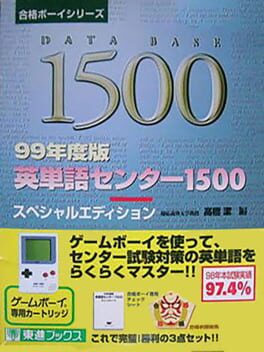
99 Nendohan: Eitango Center 1500
1998 •Game Boy
99 Nendohan: Eitango Center 1500 is a gameboy game that consists of a dictionary of English words for Japanese speakers. It was meant to be an afforda...

A Boy and His Blob: Trouble on Blobolonia
1990 •Nintendo Entertainment System, Wii
A Boy and His Blob: Trouble on Blobolonia is a 1989 video game developed by Imagineering for the Nintendo Entertainment System (NES). The game was pub...

A Bug's Life
2000 •Sega Genesis, Super Nintendo
A Bug's Life is a bootleg Mega Drive port of the game with the same name for the Game Boy Color published by Unite Lucky Technology in 2000. It was al...
GPD Q9 — Frequently Asked Questions
Every answer is built from this console's own catalogue record. Where the record is empty, the answer says so rather than guessing.
Is the GPD Q9 an official GamePad Digital product?
The console database lists the GPD Q9 under the brand GamePad Digital. It does not document whether the GPD Q9 is an officially licensed GamePad Digital product.
When was the GPD Q9 released, and what does it cost?
The console database lists the release date as 2014 and the price as Discontinued for the GPD Q9.
What chipset and how much RAM does the GPD Q9 have?
The console database lists the system on a chip as Rockchip RK3288, the CPU as Cortex-A17, and the RAM as 2 GB DDR3 for the GPD Q9.
What are the GPD Q9's dimensions, weight and battery?
The console database lists the battery as 5000 mAh for the GPD Q9. The dimensions and the weight are not documented in the console database.
Which systems can the GPD Q9 emulate well?
The console database gives the GPD Q9 a grade of B+ or better for 6 systems: Game Boy, Nintendo Entertainment System, Sega Genesis, Game Boy Advance, Super Nintendo, and PlayStation 1.
Where can I buy the GPD Q9?
The marketplace rows shown for the GPD Q9 are search and marketplace links, not a verified live price feed. The console database does not verify live prices or stock, so check the linked marketplace listings for current availability.
Sources & Editorial Notes
- Specifications are taken from this handheld's entry in the Lost In Consoles catalogue, which is compiled from manufacturer documentation and public filings. How we compile device data.
- Empty fields are published as Not documented. Nothing on this page is estimated, inferred or carried over from a similar device.
- Spotted an error? Send a correction.