
Cyber Tiger
1999 •Nintendo 64, PlayStation 1
CyberTiger was a golf game released in 2000 with a career mode consisting of various tournaments
GAMEMT EX8 by GAMEMT, Horizontal retro handheld, running Android 14, powered by MediaTek Helio G99, with a 4.88 inch display, priced around $140


Marketplace rows use affiliate-friendly links where available. Average price stays based on the console database, not live per-store pricing.
| Store | Price |
|---|---|
|
Aliexpress
Imported from spreadsheet hyperlink
|
$140 |
|
Royibeila
Imported from spreadsheet hyperlink
|
$140 |
|
Amazon
Amazon search results
|
$140 |
|
Alibaba
Alibaba search results
|
$140 |
Affiliate disclosure and terms are linked in the footer.
Broad emulation range
GAMEMT EX8 is the kind of retro handheld that makes sense only once you stop reading the spec sheet like a trophy case and start reading it like a buyer.
GAMEMT EX8 is not trying to win every argument at once; its appeal lives in the balance between emulation comfort, day-to-day usability, and whether its price still feels sane.
Before the review gets opinionated, here is the clean spec picture. This table is the reality check that keeps the rest of the write-up grounded.
| Category | Details |
|---|---|
| Release | 2025 / 11 ? |
| Form factor | Horizontal |
| Overall performance | ??¾ |
| SoC | MediaTek Helio G99 |
| CPU | Cortex-A76 / Cortex-A55 2x / 6x, 8 Cores, and 2.0 GHz - 2.2 GHz |
| GPU | Mali-G57 MC2, 2 Cores, and 1068 MHz |
| RAM | 6 GB LPDDR4 ??? |
| Display | 4.88 inch |
| Resolution | 1080 x 1620 and 3:2 |
| Battery and cooling | 5000 mAh |
| Storage and I/O | Internal 128 GB |
If this review pulls you in, the fastest next rabbit hole is RG Vita Pro and RG Vita, because those are the products most likely to clarify whether GAMEMT EX8 is your real match or just your current curiosity.
GAMEMT EX8 is best framed as a machine for shoppers who want a focused retro machine with a clear role. That may sound obvious, but it is the difference between buying a handheld that becomes a habit and one that turns into a drawer resident.
The horizontal shape matters here because it changes comfort, portability, and the kind of nostalgia the device leans into.
The release timing listed as 2025 / 11 ? helps place it in context. Context matters because buyers are not comparing isolated products; they are comparing moments in the market.
GAMEMT EX8 is described with battery: 5000 mAh. Those are not background details; they shape noise, comfort, endurance, and whether the device feels eager to be used or mildly exhausting to keep fed.
Portability is more than a number on a scale; it is the relationship between shape, battery confidence, hand comfort, and how willingly the device leaves the house. Buyers often underestimate how much daily affection is driven by the little things: where the ports sit, how the shell feels, and whether the handheld seems built for real use instead of product photos.
The practical I/O story includes Internal 128 GB. These details matter because many retro buyers are also collectors, tinkerers, dock-and-TV players, or people with large libraries that need sensible storage and transfer options.
GAMEMT EX8 pairs the hardware with 4.88 inch, 1080 x 1620, and 3:2. That is the kind of detail stack retro buyers should linger on, because a handheld can be technically capable and still feel wrong if the aspect ratio, sharpness, and scaling story are off.
Control detail is sparse in the sheet, but that absence is itself a signal: it means buyers should lean harder on form factor, brand reputation, and comparative market positioning. A device can run a game and still fail the vibe test if the controls feel like an afterthought.
The 3:2 aspect ratio adds another layer to the story. Retro gaming screens are never neutral. They reward some libraries, punish others, and always whisper a preference about how the device expects to be used.
| Console | Angle | Price | Performance | Why Click Through |
|---|---|---|---|---|
RG Vita Pro Anbernic | Better Value | TBD | ??½ (Estimate) | horizontal layout, rated ??½ (Estimate). |
RG Vita Anbernic | Closest Match | TBD | 2 | horizontal layout. |
CoolBaby RS-11 CoolBaby | Better Value | Discontinued | ⭐️⭐️⭐️ | horizontal layout, tracked around Discontinued, rated ⭐️⭐️⭐️. |
GAMEMT E5 Ultra Unknown brand | Closest Match | TBD | 2 | horizontal layout. |
GAMEMT EX8 becomes much easier to judge once it is forced into the same room as RG Vita Pro, RG Vita, and CoolBaby RS-11. This is where a vague impression turns into a real buying decision, because each nearby rival throws a different kind of pressure on the table.
GAMEMT EX8 versus RG Vita Pro is interesting because better value is the obvious angle. Compared with GAMEMT EX8, RG Vita Pro makes the more obvious play for readers who care about better value. Its overall rating is ??½ (Estimate). More importantly, gAMEMT EX8 versus RG Vita is interesting because closest match is the obvious angle. RG Vita sits close enough to GAMEMT EX8 to make the comparison meaningful, but different enough to sharpen the buying decision. That said, gAMEMT EX8 versus CoolBaby RS-11 is interesting because better value is the obvious angle. CoolBaby RS-11 sits close enough to GAMEMT EX8 to make the comparison meaningful, but different enough to sharpen the buying decision. CoolBaby RS-11 is tracked around Discontinued. That said, its overall rating is ⭐️⭐️⭐️.
Comparison is the antidote to spec-sheet hypnosis. Once you stack the neighbors side by side, you stop asking which one is objectively best and start asking which one is best for your habits.
GAMEMT EX8 does not yet have a clean average market price, which makes the buying case more fluid than the hardware itself. Price does not just change whether a device feels affordable. It changes what kinds of flaws buyers are willing to forgive.
Availability is part of the value story too. A strong handheld with sketchy storefronts or inconsistent launch timing can still become a frustrating buy.
Every handheld makes tradeoffs somewhere, even when the spreadsheet leaves them unstated. Good buying advice is not about pretending the downsides do not exist; it is about deciding whether the downsides land in the part of the experience you personally care about.
The heart of the machine is the MediaTek Helio G99. CPU duties are handled by Cortex-A76 / Cortex-A55 2x / 6x. Graphics are handled by Mali-G57 MC2. Memory is listed at 6 GB LPDDR4 ???. The sheet rates the overall performance at ??¾, or roughly 2.8 on the normalized scale.
The CPU side is described with 8 Cores, 8 Threads, and 2.0 GHz - 2.2 GHz, which is more useful than brand names alone because it hints at how much headroom the handheld should have before emulator tuning gets annoying. On the graphics side, 2 Cores, 1068 MHz, and ARM helps sketch the ceiling for heavier systems, upscale experiments, and shader curiosity.
GAMEMT EX8 looks strongest with Game Boy (A), NES (A), Sega Genesis (A), Game Boy Advance (A), Super Nintendo (A), and PlayStation 1 (A), which gives the review something more tangible than a vague "good for retro" verdict.
The middle tier of compatibility, including Wii (C) and PlayStation 2 (C), is where the buyer needs some honesty. These are usually the systems that separate a casual dabbler from a user who is happy tweaking emulator settings, testing cores, or accepting the occasional rough edge.
GAMEMT EX8 leaves the strongest impression when you frame it as a recommendation for shoppers who want a focused retro machine with a clear role. That is the lens that makes the strengths feel intentional instead of accidental.
Broad emulation range is not just a catchy label here. It is the cleanest shorthand for why this device deserves attention. The compatibility profile around Game Boy (A), NES (A), Sega Genesis (A), and Game Boy Advance (A) gives it a concrete identity.
If the device sparks your interest, the smartest next click is usually RG Vita Pro, followed by RG Vita, because that is where the shape of the market around it comes into focus. A useful verdict should leave the reader more curious, but also more precise.
Games shown here match systems this handheld can run at a B grade or better.
1999 •Nintendo 64, PlayStation 1
CyberTiger was a golf game released in 2000 with a career mode consisting of various tournaments

1995 •PlayStation 3, Sega Saturn
Virtual-On is set up similar to a Versus fighting game. Two Virtuaroids (Mecha) face each other on a stage. The player(s) use a variety of firearms, e...

1998 •Dreamcast
Cyber Troopers Virtual-On: Oratorio Tangram is the first of three major revisions to Cyber Troopers Virtual-On: Oratorio Tangram, a sequel to Cyber Tr...

1990 •Sega Genesis
Play as an Zodiac Agent investigating a series of murders around Universal Cybernetics Corporation's factory in London in this early FPS/RPG hybrid de...

1988 •Nintendo Entertainment System, Sega Genesis
Cyberball is an Atari Games arcade game of 7-man American football, using robotic avatars of different speeds, sizes, and skill sets. The game replace...

1995 •PlayStation 1, PlayStation 3, PSP, Sega Saturn
The premise in Cyberbots is similar to Armored Warriors, albeit it features only a maximum of two playable characters on screen as opposed to three. I...
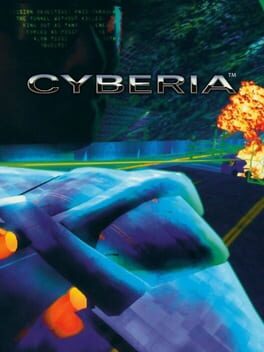
1994 •PlayStation 1, Sega Saturn
In a future where global terrorists rule and mankind lives on the brink of destruction, the the ultimate doomsday device has just been discovered bene...

1993 •Super Nintendo, Wii, Wii U
Cybernator is a run and gun game released in 1992 for the Super Nintendo Entertainment System. It is the indirect prequel to Target Earth as part of t...


1988 •Nintendo Entertainment System, Wii
Cybernoid: The Fighting Machine is a shoot 'em up developed and published in 1987 by Hewson Consultants for the ZX Spectrum, and was then ported to th...

1995 •PlayStation 1
Race around a futuristic race track tied to a cable, bumping and shooting your opponents. Think "Wipeout" meets cable cars.

1994 •PlayStation 1
Cyberwar is a DOS game based on the film The Lawnmower Man and a direct sequel to the video game adaptation of the film, which itself takes place afte...