
Fantasy Zone
2022 •Sega Genesis
A port of the Arcade game, made exclusively for the Sega Genesis Mini 2/Mega Drive Mini 2.
GAMEMT E5 Ultra by GAMEMT, Horizontal retro handheld, running Android 14, powered by UNISOC T620, with a 5.0 inch display

Marketplace rows use affiliate-friendly links where available. Average price stays based on the console database, not live per-store pricing.
| Store | Price |
|---|---|
|
Amazon
Amazon search results
|
Check store |
|
Aliexpress
Imported from spreadsheet hyperlink
|
Check store |
|
Aliexpress 2
Imported from spreadsheet hyperlink
|
Check store |
|
Alibaba
Alibaba search results
|
Check store |
Affiliate disclosure and terms are linked in the footer.
Broad emulation range
GAMEMT E5 Ultra is the kind of retro handheld that makes sense only once you stop reading the spec sheet like a trophy case and start reading it like a buyer.
If your library leans toward Game Boy, NES, and Sega Genesis, GAMEMT E5 Ultra immediately becomes more than just another line in a spreadsheet.
Before the review gets opinionated, here is the clean spec picture. This table is the reality check that keeps the rest of the write-up grounded.
| Category | Details |
|---|---|
| Release | Upcoming |
| Form factor | Horizontal |
| Overall performance | 2 |
| SoC | UNISOC T620 |
| CPU | Cortex-A75 / Cortex-A55 2x / 6x, 8 Cores, and 1.82 GHz - 2.21 GHz |
| GPU | Mali G57 MP1, 1 Core, and 850 MHz |
| RAM | 6 GB LPDDR4X |
| Display | IPS Touchscreen |
| Resolution | 1280 x 720 |
If this review pulls you in, the fastest next rabbit hole is RG Vita and RG Vita Pro, because those are the products most likely to clarify whether GAMEMT E5 Ultra is your real match or just your current curiosity.
GAMEMT E5 Ultra does not yet have a clean average market price, which makes the buying case more fluid than the hardware itself. Price does not just change whether a device feels affordable. It changes what kinds of flaws buyers are willing to forgive.
Availability is part of the value story too. A strong handheld with sketchy storefronts or inconsistent launch timing can still become a frustrating buy.
Every handheld makes tradeoffs somewhere, even when the spreadsheet leaves them unstated. Good buying advice is not about pretending the downsides do not exist; it is about deciding whether the downsides land in the part of the experience you personally care about.
GAMEMT E5 Ultra pairs the hardware with IPS Touchscreen and 1280 x 720. That is the kind of detail stack retro buyers should linger on, because a handheld can be technically capable and still feel wrong if the aspect ratio, sharpness, and scaling story are off.
Control detail is sparse in the sheet, but that absence is itself a signal: it means buyers should lean harder on form factor, brand reputation, and comparative market positioning. This is where a retro handheld stops being abstract and starts becoming a piece of physical furniture for your hands.
Retro display choices are always a negotiation. The right screen is not always the fanciest one. Sometimes it is the one that makes your core library look natural instead of merely possible.
GAMEMT E5 Ultra is best framed as a machine for shoppers who want a focused retro machine with a clear role. The smartest handheld purchases usually happen when the buyer matches the hardware to a play style instead of falling for the loudest marketing line.
The horizontal shape matters here because it changes comfort, portability, and the kind of nostalgia the device leans into.
The release timing listed as Upcoming helps place it in context. Context matters because buyers are not comparing isolated products; they are comparing moments in the market.
| Console | Angle | Price | Performance | Why Click Through |
|---|---|---|---|---|
RG Vita Anbernic | Better Value | TBD | 2 | horizontal layout. |
RG Vita Pro Anbernic | Better Value | TBD | ??½ (Estimate) | horizontal layout, rated ??½ (Estimate). |
GAMEMT EX8 Unknown brand | Better Value | TBD | ??¾ | horizontal layout, rated ??¾. |
RGB50 PowKiddy | Closest Match | TBD | ?¼ | horizontal layout, rated ?¼. |
GAMEMT E5 Ultra becomes much easier to judge once it is forced into the same room as RG Vita, RG Vita Pro, and GAMEMT EX8. This is where a vague impression turns into a real buying decision, because each nearby rival throws a different kind of pressure on the table.
GAMEMT E5 Ultra versus RG Vita is interesting because better value is the obvious angle. Compared with GAMEMT E5 Ultra, RG Vita makes the more obvious play for readers who care about better value. That said, gAMEMT E5 Ultra versus RG Vita Pro is interesting because better value is the obvious angle. RG Vita Pro sits close enough to GAMEMT E5 Ultra to make the comparison meaningful, but different enough to sharpen the buying decision. Its overall rating is ??½ (Estimate). From another angle, gAMEMT E5 Ultra versus GAMEMT EX8 is interesting because better value is the obvious angle. GAMEMT EX8 sits close enough to GAMEMT E5 Ultra to make the comparison meaningful, but different enough to sharpen the buying decision. From another angle, its overall rating is ??¾.
A handheld earns a place in the shortlist when it can survive comparison without needing excuses. That is the standard this section is really applying.
The heart of the machine is the UNISOC T620. CPU duties are handled by Cortex-A75 / Cortex-A55 2x / 6x. Graphics are handled by Mali G57 MP1. Memory is listed at 6 GB LPDDR4X.
The CPU side is described with 8 Cores, 8 Threads, and 1.82 GHz - 2.21 GHz, which is more useful than brand names alone because it hints at how much headroom the handheld should have before emulator tuning gets annoying. On the graphics side, 1 Core, 850 MHz, and ARM helps sketch the ceiling for heavier systems, upscale experiments, and shader curiosity.
GAMEMT E5 Ultra looks strongest with Game Boy (A), NES (A), Sega Genesis (A), Game Boy Advance (A), Super Nintendo (A), and PlayStation 1 (A), which gives the review something more tangible than a vague "good for retro" verdict.
The middle tier of compatibility, including GameCube (C), Wii (C), Nintendo 3DS (C), and PlayStation 2 (C), is where the buyer needs some honesty. These are usually the systems that separate a casual dabbler from a user who is happy tweaking emulator settings, testing cores, or accepting the occasional rough edge.
GAMEMT E5 Ultra does not publish a perfect battery-and-cooling story, but daily usability still shows up in the surrounding physical details.
Portability is more than a number on a scale; it is the relationship between shape, battery confidence, hand comfort, and how willingly the device leaves the house. Buyers often underestimate how much daily affection is driven by the little things: where the ports sit, how the shell feels, and whether the handheld seems built for real use instead of product photos.
The port and expansion picture is part of the hidden quality of a handheld. A device can look attractive until you realize the storage, charging, or output setup keeps boxing you into narrower habits.
GAMEMT E5 Ultra leaves the strongest impression when you frame it as a recommendation for shoppers who want a focused retro machine with a clear role. That is also what turns the buying advice from noise into something useful.
Broad emulation range is not just a catchy label here. It is the cleanest shorthand for why this device deserves attention. The compatibility profile around Game Boy (A), NES (A), Sega Genesis (A), and Game Boy Advance (A) gives it a concrete identity.
If the device sparks your interest, the smartest next click is usually RG Vita, followed by RG Vita Pro, because that is where the shape of the market around it comes into focus. That is what a good review should do: not close the conversation, but sharpen the next choice.
Games shown here match systems this handheld can run at a B grade or better.
2022 •Sega Genesis
A port of the Arcade game, made exclusively for the Sega Genesis Mini 2/Mega Drive Mini 2.
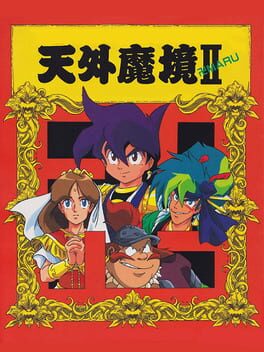
1992 •Nintendo DS
Tengai Makyou II: Manji Maru is a role-playing video game and the second game in the Tengai Makyou series.
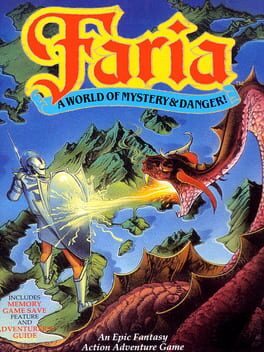
1989 •Nintendo Entertainment System
The player controls a female character throughout most of the game. A male character is played towards the end of the game. The game uses "Levels", HP...
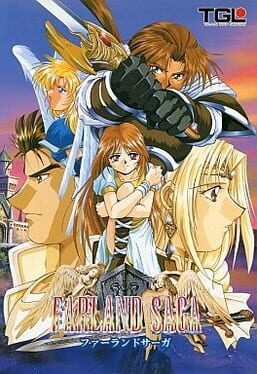
1996 •Sega Saturn
An alternative retelling of the original story on PC98. Though instead of an Isometric SRPG it uses a "top down" view.
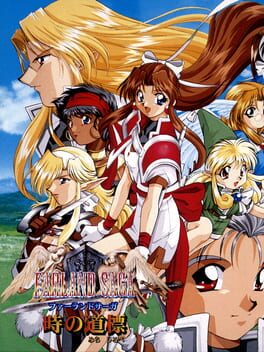
1997 •PlayStation 1, PlayStation 3, PSP, Sega Saturn
Toki no Michishirube is a direct sequel to the first Farland Saga game. It is an anime-style strategy RPG which consists mainly of large strategic bat...
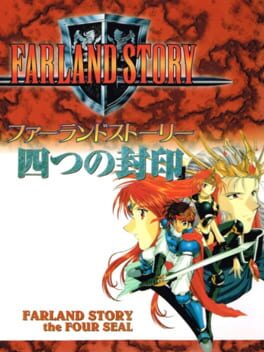
1997 •PlayStation 1, PlayStation 3, PSP
A remake of the first two games in TGL's long-running Farland series of turn-based strategy RPGs combined together. The hero Arc is forced to rescue h...

2007 •PlayStation 3, PSP
Slip into a pair of overalls and try your hand at running a farm! From tending to the fields where your cows graze to gathering eggs for sale at the t...

2008 •PlayStation 3, PSP
There's nothing wrong with indulging in a little "fowl play" when it's Farm Frenzy 2, the all-new sequel to the smash hit of 2007! The fun never stops...

2009 •PlayStation 3, PSP
Manage five farms around the world and try your hand at penguin-breeding and jewelry-making in Farm Frenzy 3! Features 95 outrageously fun levels, 30...
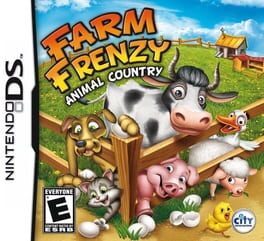
2010 •Nintendo DS
Have you ever wanted to be a farmer? In Farm Frenzy: Animal Country that's just what you become as you go down on the farm where the fun never stops....

2010 •PlayStation 3, PSP
Pizza lovers unite! It's time to return to the farm to create your favorite food! You'll start out by growing grass, feeding animals and collecting pr...

2007 •Nintendo DS
Farming game for Nintendo DS published in 2007 for the European market. Developed by Destineer and Black Lantern Studios and published by Ubisoft. Fa...